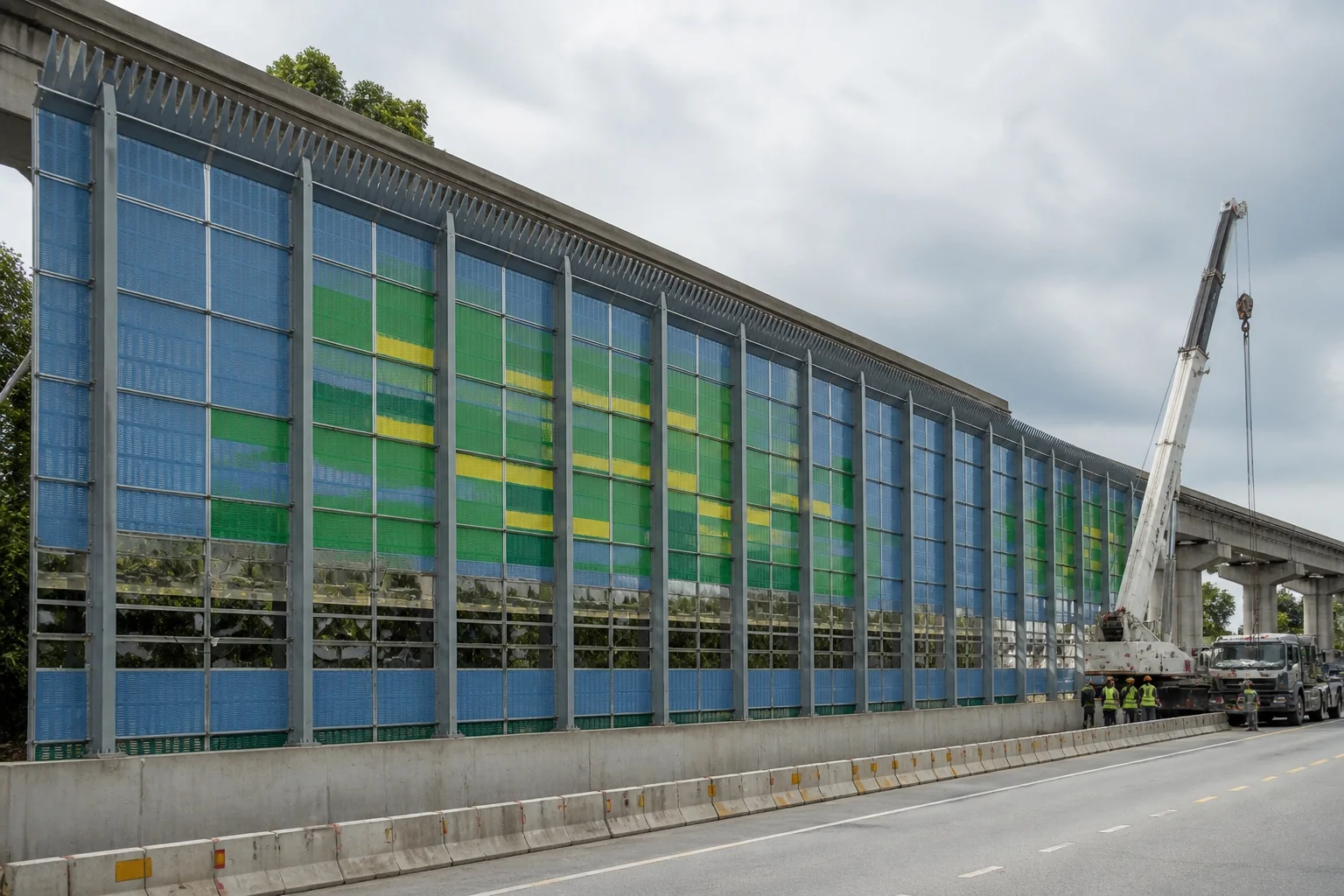
Rigid modular panels
Durable, reusable barrier sections for longer deployments and defined site perimeters.
- Robust framed construction
- Repeatable modular bays
- Controlled access options

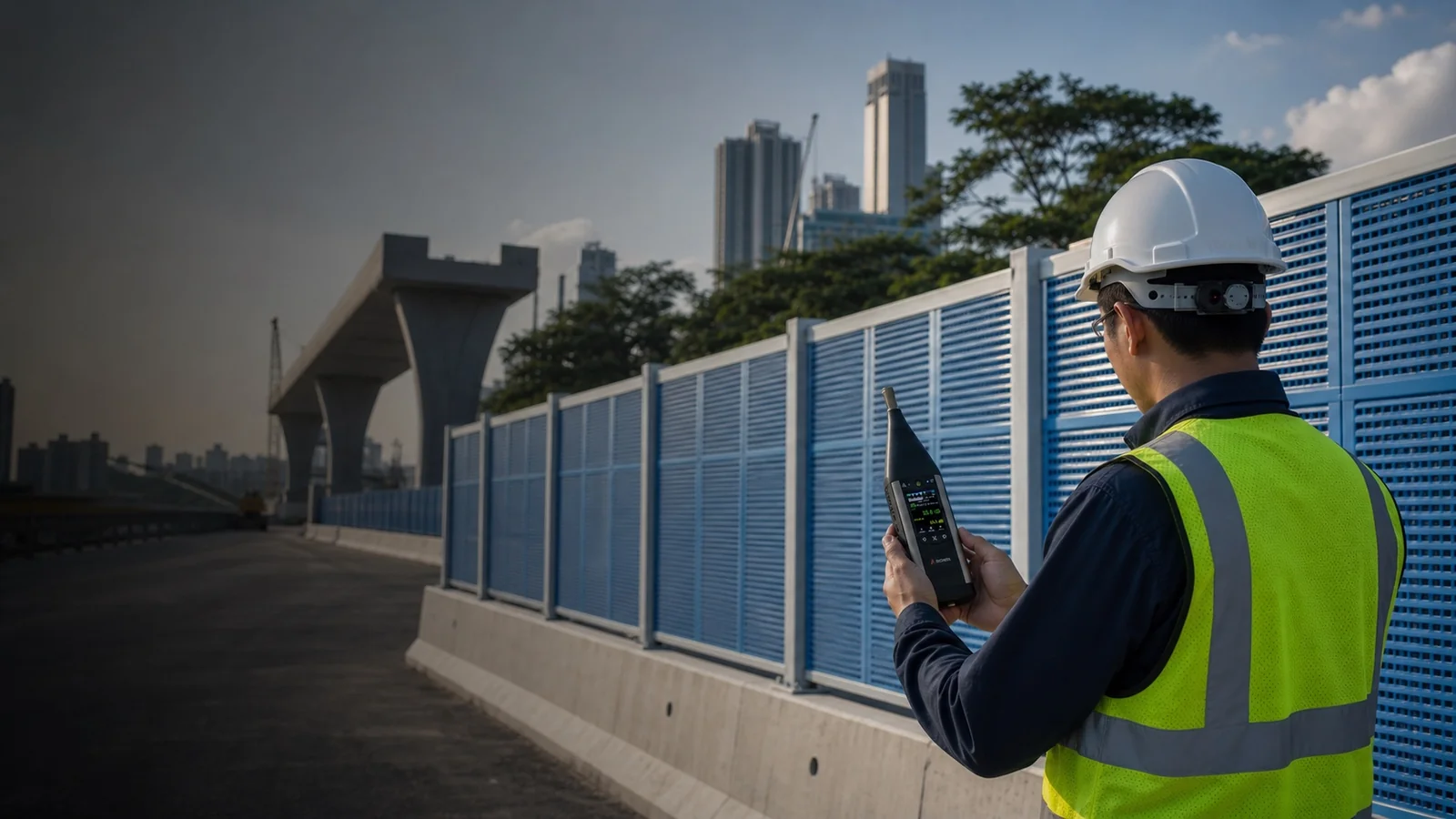
Modular noise control
Reconfigurable temporary barrier systems for active worksites—supported by acoustic planning, installation guidance and performance verification.
Request a site assessment ↗Designed for real sites
Temporary noise barriers are modular screens positioned close to a source or along a site boundary to interrupt the direct sound path. They can be relocated as works progress, making them suitable for projects where access, sequencing and noise sources continually change.
Effective performance depends on the complete arrangement—not the panel alone. S&V Teknik can help consider barrier height, continuity, proximity to source, ground conditions, flanking paths and safe wind-loading requirements.
Product configurations
Final specifications are selected against project geometry, acoustic objectives and structural requirements.
Durable, reusable barrier sections for longer deployments and defined site perimeters.
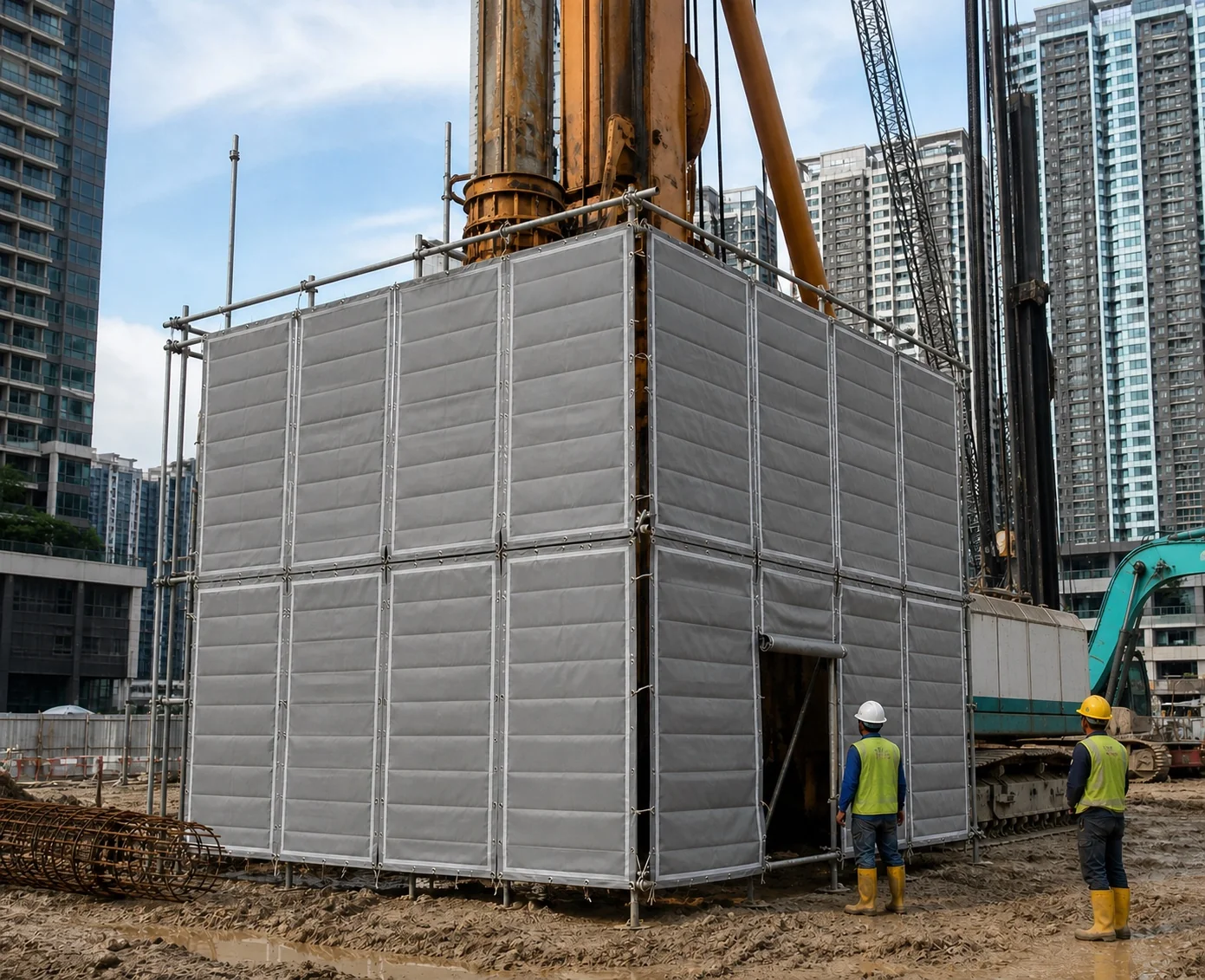
Portable absorptive curtains for localised equipment, temporary fencing and changing work fronts.
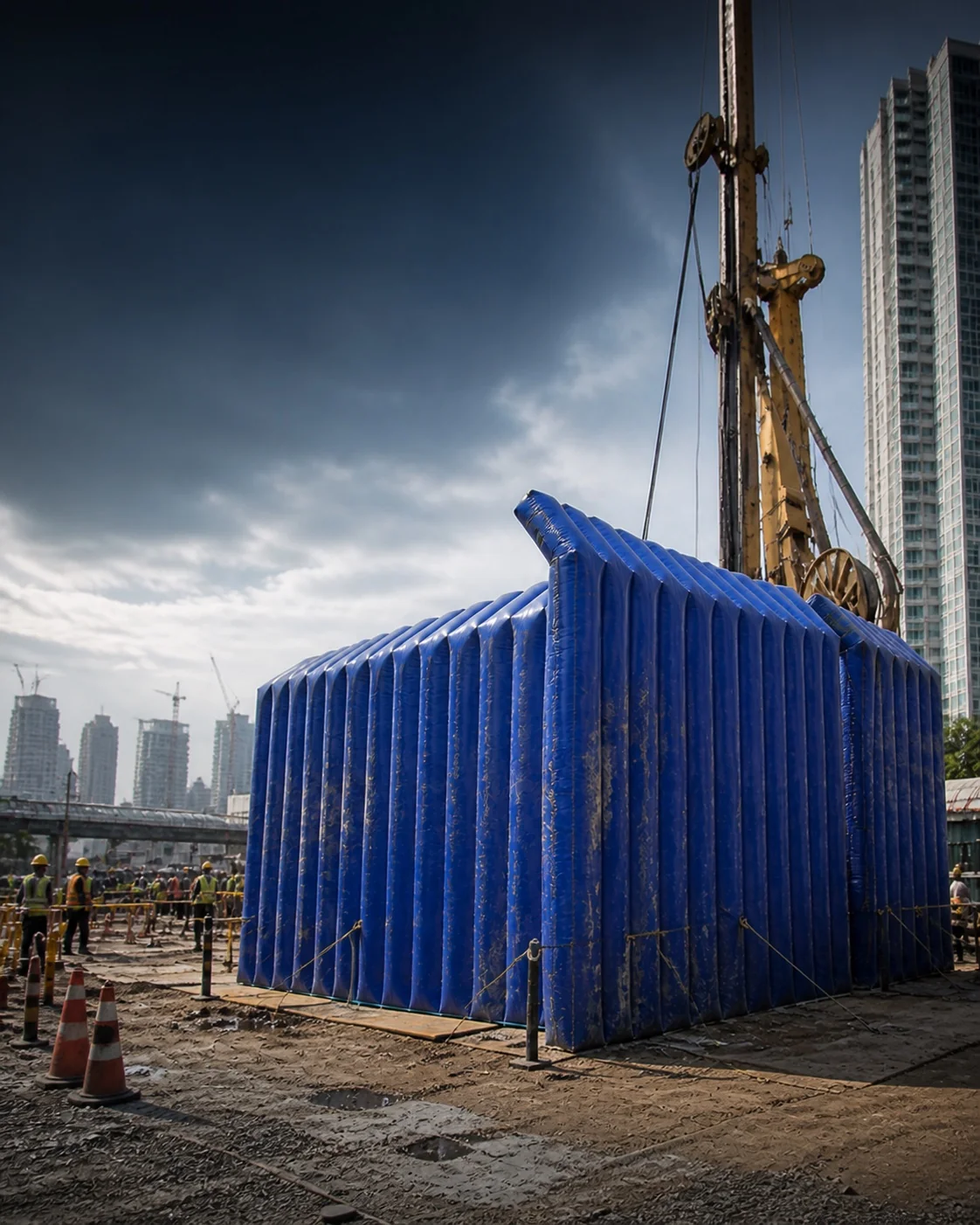
Three- or four-sided configurations for generators, pumps, saws and other concentrated sources.
Common applications
More than panels
A coordinated service helps ensure the proposed barrier is appropriate for the source and receiver geometry.
Sources, receptors, access, programme and constraints.
Layout, extent, height and treatment of openings or ends.
Supply, installation guidance and safe site coordination.
Optional monitoring to assess and document performance.
Practical questions
Barrier performance is governed by the full site geometry. These answers are useful screening guidance; the final arrangement should be checked against your source, receiver and project requirements.
It blocks the direct line of sight between the noise source and receiver, forcing sound to diffract over or around the barrier. A continuous barrier located close to the source is usually more effective than one with gaps or large end-flanking paths.
Usually as close as practicable to the source or receiver, while maintaining access, ventilation and site safety. Height, length, ground level and openings must be assessed together.
Yes. We can combine baseline noise measurement with post-installation measurement or longer-term monitoring, subject to the agreed scope and applicable project criteria.
Send the project location, source type, operating hours, nearest sensitive receiver, drawings or site photos, required barrier length and expected deployment period.
Request a recommendation
For a useful first review, include the noise source, operating hours, nearest sensitive receiver, available plans or photos, and your required deployment period.